Alula Australis is a remarkable stellar system, a rare hierarchical quadruple-star system located within the settled regions of known space. At its heart are two nearly identical G-class stars, both closely resembling Sol in size, luminosity, and color.
These primary stars, designated Aa and Ba, orbit one another at an average distance of 21.2 AU. Their highly eccentric orbit periodically draws them as close as 13 AU, creating dramatic changes in illumination and sky conditions across the system's inhabited worlds.
Each of the two solar analogs is accompanied by a red dwarf companion. The first pair consists of Aa and the red dwarf Ab, which circles its parent star at an average distance of just 0.8 AU. The second pair contains Ba and Bb, with the latter completing a rapid four-day orbit around its primary. Together these four stars form an intricate gravitational ballet that has remained stable for billions of years.
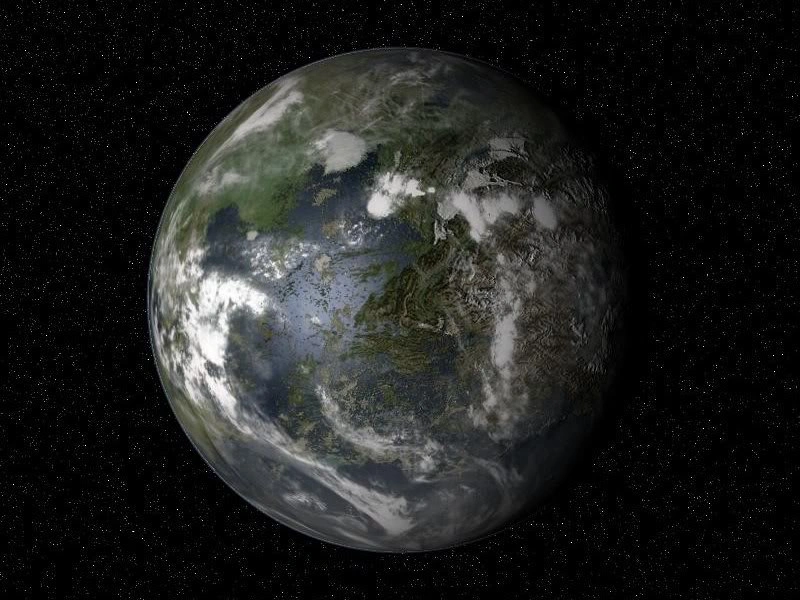
The inhabited world of Axia, orbiting within the Aa system, offers one of the most spectacular skies known. Residents regularly witness the golden light of their primary sun accompanied by the dim crimson glow of Ab, while the distant Ba-Bb pair shines brilliantly overhead.
Despite being separated by billions of kilometers, the companion system appears approximately 6,000 times brighter than a full moon, casting noticeable shadows and illuminating the night landscape with a faint golden-white glow. Few settled systems offer such a constantly changing panorama of twin dawns, overlapping sunsets, and nights bright enough to read by.