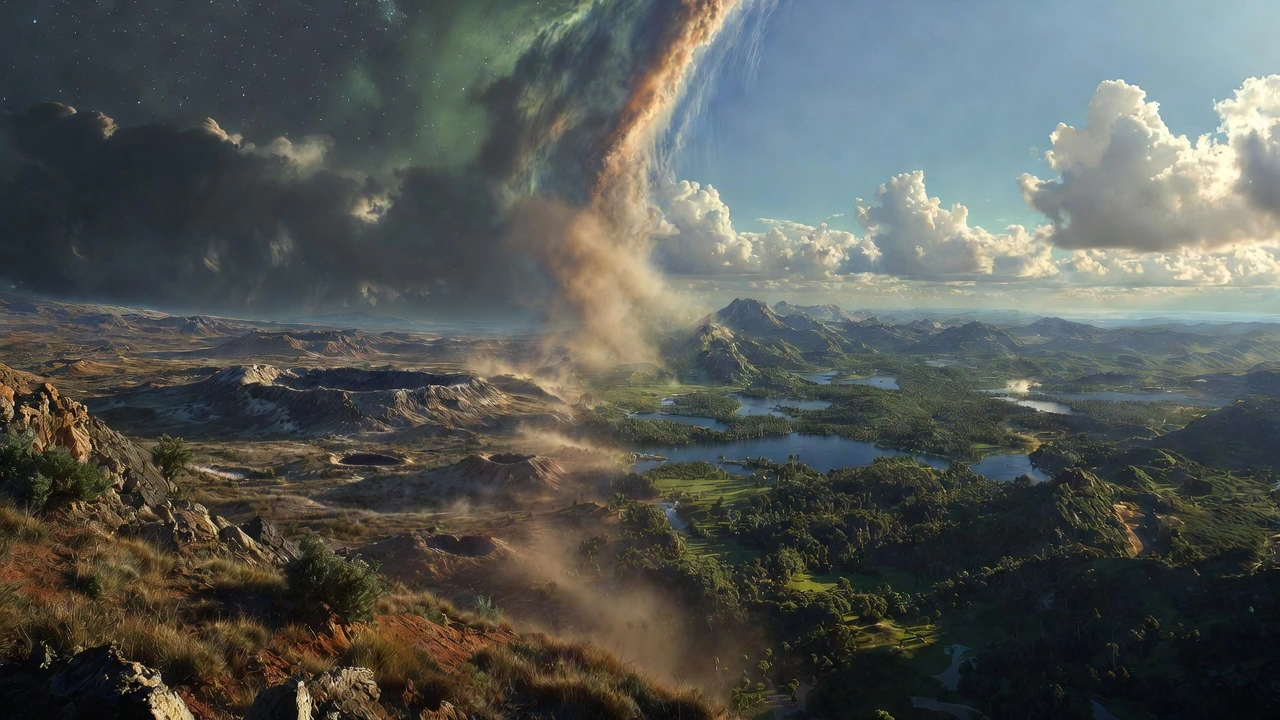
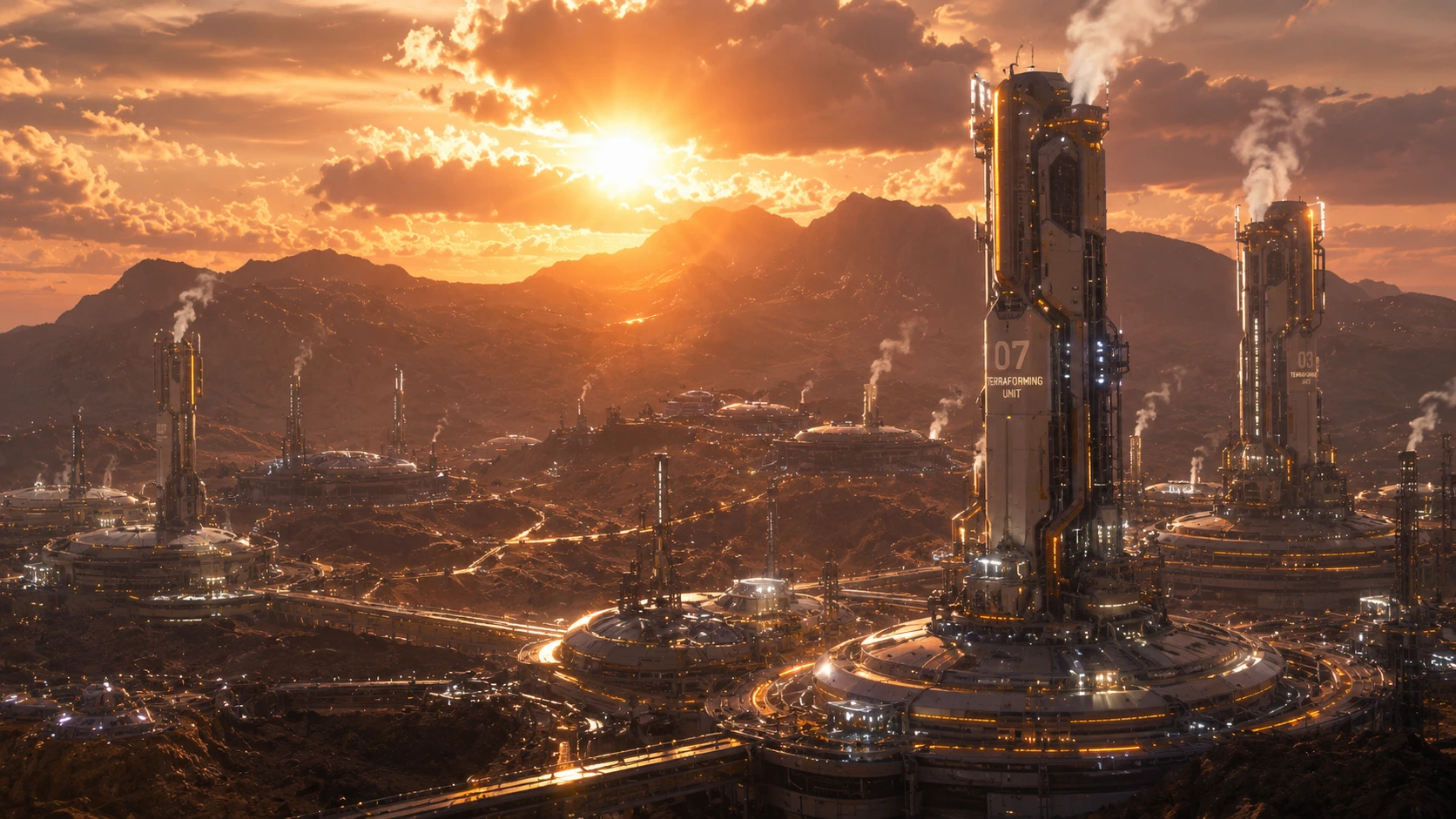
Terraforming is one of the most ambitious sciences of the human expansion era. The practice combines orbital infrastructure, industrial chemistry, genetic engineering, and long-term ecological management to reshape planets that are almost—but not quite—suitable for human settlement.
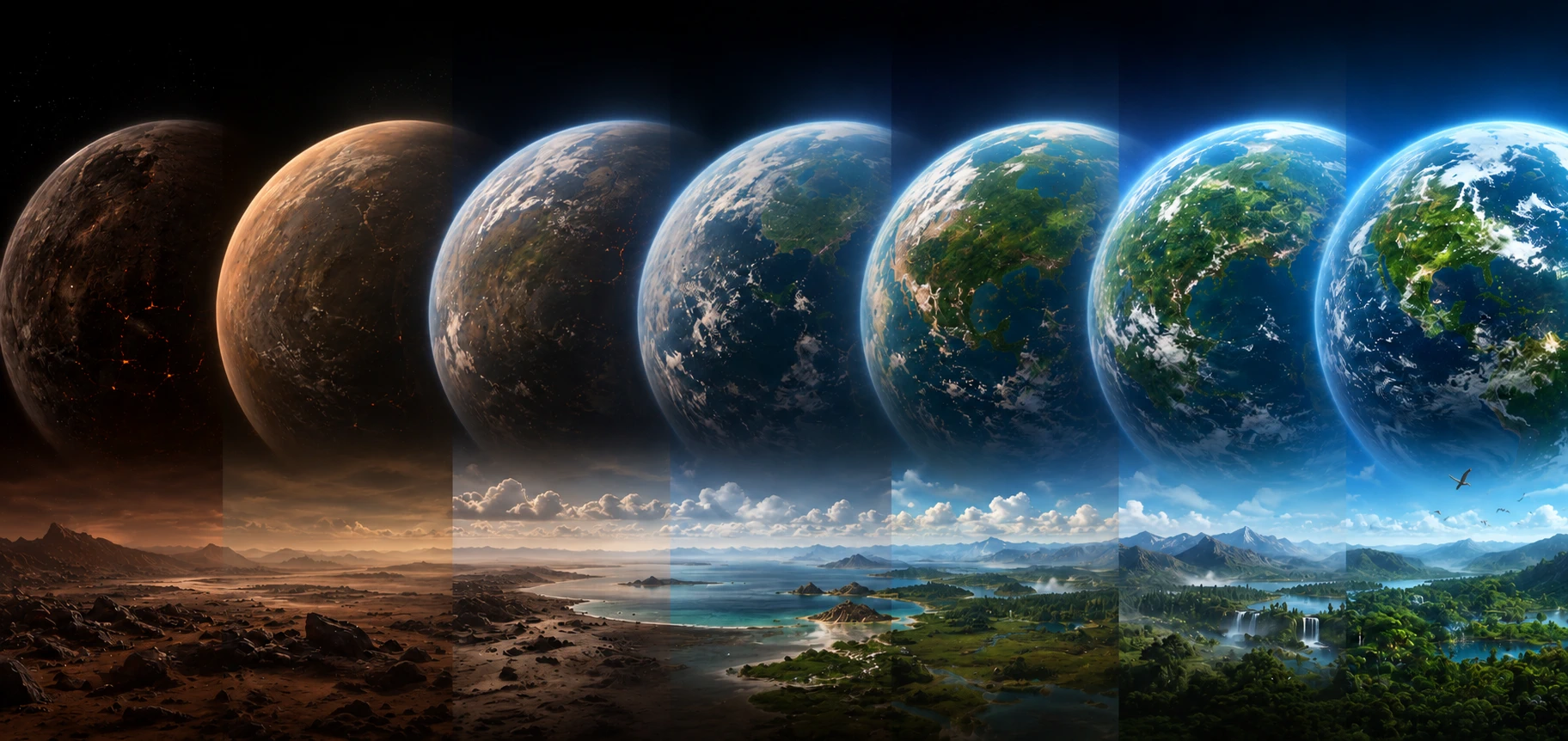
Most candidates begin as frozen deserts, thin-atmosphere rock worlds, toxic greenhouse planets, or water-rich moons lacking stable surface conditions. A successful project does not simply add air or warmth; it creates a self-regulating planetary system where oceans, weather, microbes, plants, and engineered organisms reinforce one another over centuries.
Even advanced terraforming rarely produces a perfect duplicate of Earth. Each finished world carries traces of its origin: unusual skies, modified plant lines, managed weather bands, artificial seas, or atmospheric balances that require periodic correction.