Cosmopedia · Astronomical Archive

Stellar Luminosity

The total radiant energy emitted by a star, governing planetary temperatures, habitable zone distance, visual brightness, and the long-term environments of every world that orbits it.

Overview

Stellar luminosity is the total amount of energy a star emits into space. While apparent brightness describes how bright a star appears from a particular location, luminosity measures the star's true radiant output regardless of distance. It is one of the most important values recorded in any stellar survey.

Luminosity is commonly measured relative to Sol using the solar luminosity symbol L☉. A star with one solar luminosity emits approximately the same total energy as Earth's Sun, while stars above or below that value create dramatically different environments for their surrounding planets.

A star's luminosity shapes the location of its habitable zone, the intensity of radiation reaching nearby worlds, the stability of planetary climates, and the visibility of the star across interstellar distances. For navigators, astronomers, and colony planners, luminosity is not simply a measure of brightness; it is a measure of influence.
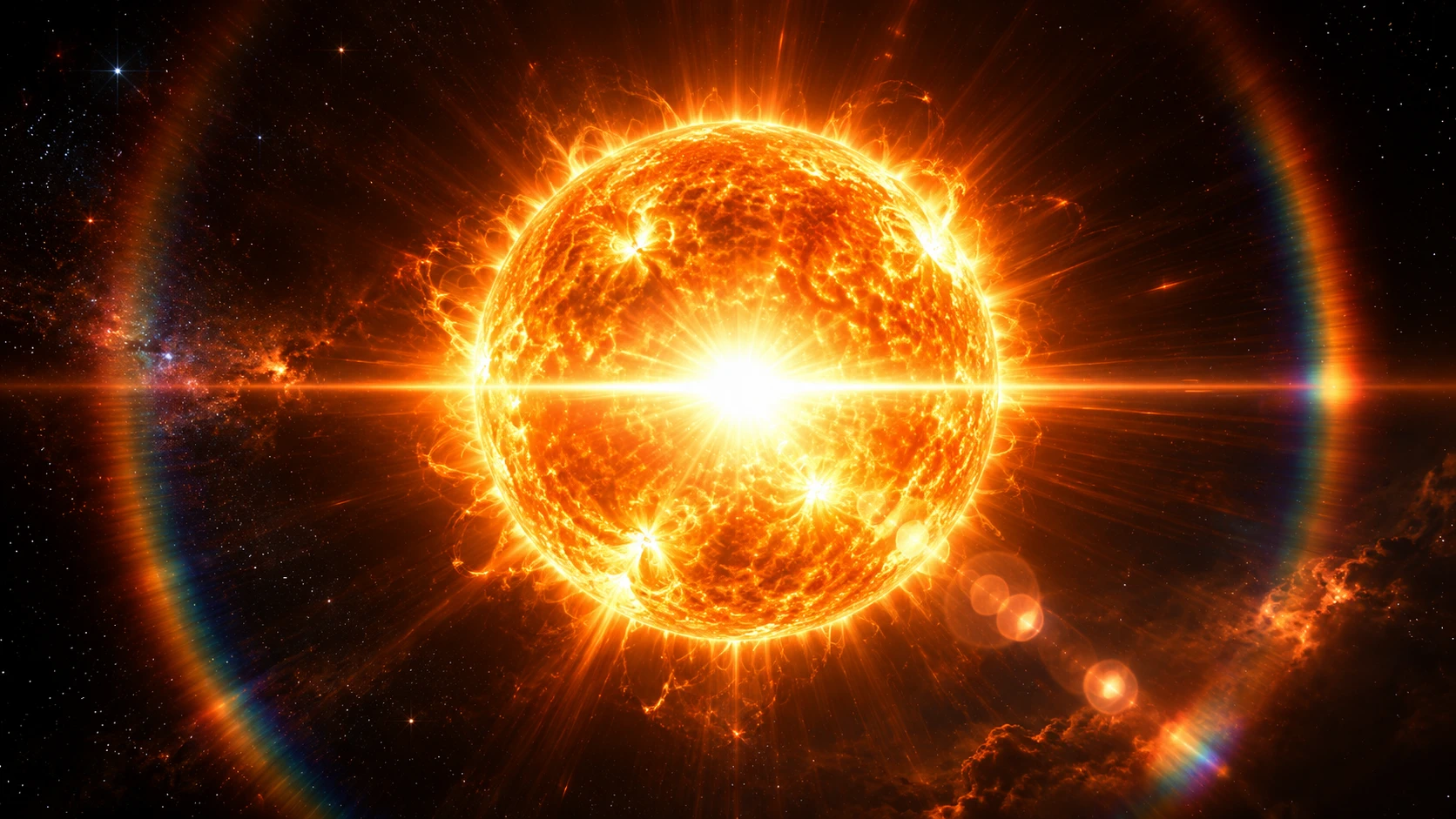
Understanding Luminosity

Luminosity describes the total power produced by a star across all wavelengths of light and radiation. A star may appear faint in the night sky because it is distant, not because it is intrinsically dim. Conversely, a nearby red dwarf may appear relatively bright to local observers while producing only a fraction of Sol's total energy.

This distinction between apparent brightness and true luminosity became essential during the earliest eras of interstellar mapping. Surveyors learned that a star's visual appearance alone could not determine whether its worlds were warm, frozen, irradiated, or suitable for further study.

Modern instruments calculate luminosity by comparing distance, observed brightness, temperature, radius, and spectral output. The result allows every charted star to be placed within a consistent galactic catalog.

Apparent brightness tells an observer how bright a star looks. Luminosity reveals how powerful the star truly is.

Brightness and Distance

A star's observed brightness depends heavily on distance. Two stars with identical luminosity can appear very different if one lies nearby and the other is thousands of light-years away. This relationship led to the development of standardized magnitude systems, allowing astronomers to separate a star's true energy output from the effects of distance.

Absolute brightness values are especially useful for navigation networks. By comparing the expected brightness of known stars with their observed intensity, vessels can verify position, calibrate sensors, and identify reference stars even in crowded regions of space.

Luminosity RangeTypical StarsHabitable Zone TrendSurvey Notes
Below 0.1 L☉Dim red dwarfsVery close to the starCommon, long-lived, but worlds may face tidal locking and flare exposure.
Around 1 L☉Solar-type starsModerate orbital distancesHighly valued for familiar energy output and stable settlement conditions.
10–100 L☉Bright main sequence starsFarther from the starUseful for navigation and survey work, but often less stable for long-term habitation.
Thousands of L☉ or moreGiants and supergiantsExtremely distant or unstableScientifically important, visually prominent, and often hazardous to nearby worlds.

Luminosity and Habitable Zones

The habitable zone around a star is largely determined by luminosity. More luminous stars push their temperate orbital regions farther outward, while dimmer stars require planets to orbit much closer in order to receive enough energy for stable surface conditions.

This relationship affects every aspect of planetary development. Worlds close to dim stars may become tidally locked, with one hemisphere facing permanent daylight and the other trapped in darkness. Worlds around brighter stars may orbit at safer distances but experience greater ultraviolet radiation, stronger stellar winds, or shorter windows of stellar stability.

Terraforming agencies evaluate luminosity before committing resources to any candidate world. The energy reaching a planet determines atmospheric chemistry, ocean stability, photosynthetic potential, ice coverage, and the amount of artificial intervention required to maintain a livable environment.

Luminosity Over Time

A star's luminosity is not fixed. Over millions or billions of years, stellar output changes as fusion processes alter the structure of the core. Main sequence stars generally brighten as they age, while giant stars can increase their luminosity enormously as they expand near the end of their lives.

These changes can transform entire planetary systems. A world that once rested comfortably inside a habitable zone may eventually become too hot, while colder outer planets and moons may warm into temporary habitability as their parent star evolves.

Long-term civilizations track luminosity trends carefully. Even slow increases in stellar output can reshape climates, migration plans, orbital infrastructure, and terraforming schedules over civilizational timescales.

Dim DwarfLow output and close-in habitable zones.
Orange StarSteady output over long timescales.
Sol-TypeModerate luminosity and familiar climates.
Bright StarWider habitable zones and higher radiation.
GiantImmense output and unstable surroundings.
Beacon StarVisible across vast interstellar distances.

Importance to Colonization

Stellar luminosity is a core factor in colonization planning. Before a world is approved for settlement, surveyors estimate how much stellar energy reaches its orbit, how stable that output is likely to remain, and whether natural climate cycles can support permanent habitation.

A highly luminous star may create broad zones of warmth but also expose planets to intense radiation and shorter stellar lifespans. A dim star may offer stability measured in trillions of years, but its habitable worlds may be locked close to the star and vulnerable to flare activity.

For this reason, luminosity is recorded alongside mass, spectral class, age, and planetary data in every major system survey. It helps determine where colonies are founded, how they are engineered, and how long they are expected to endure.