Stellar Archive · Aging Suns and Expanding Habitable Zones

Red Giant Stars

Red giant systems are places of brilliant beauty and extreme danger, where aging stars swell outward, flood nearby worlds with deep orange light, and transform once-stable planets into deserts, ruins, mining frontiers, or sealed refuges.

Stellar TypeAging StarsInfrared WorldsLore Index

Overview

Red GiantsStellar EvolutionScorched WorldsOuter Habitable Zones

Red giant stars are swollen, luminous stars near the later stages of their lives. In the Darknovus archive, they mark systems where time has become the dominant force: oceans boil away, former temperate planets become furnace deserts, and distant moons may briefly warm enough to support settlements or engineered ecosystems.

These systems are rarely gentle. The enlarged star can dominate the sky, throwing long red shadows across airless basins, cracked plains, and glassed rock. Older colonies often survive through migration, heavy shielding, underground infrastructure, or orbital habitats positioned far beyond the original inner worlds.

For explorers and settlers, red giant systems are both warnings and opportunities. They preserve evidence of worlds changed by stellar decline, but they also expose minerals, warm once-frozen bodies, and create dramatic frontier environments unlike those around younger main-sequence suns.
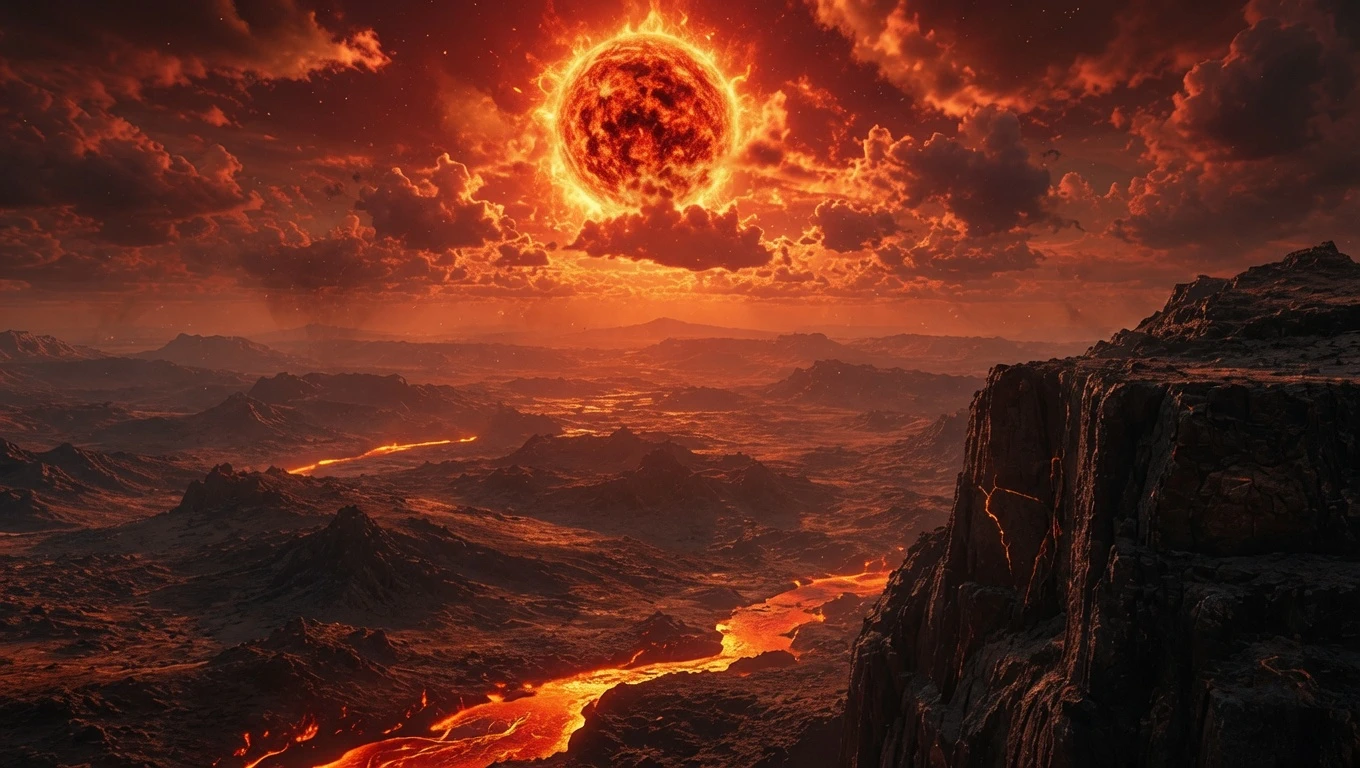

Scorched planetary landscape beneath a huge red giant star
Aging Stellar ClassRed giant systems turn familiar planetary geography into harsh, radiant frontier terrain.

When Suns Begin to Swell

Huge red giant over a desert horizon

Light Becomes Landscape

As a star exhausts its core fuel, its outer layers expand and cool into a redder, vastly larger sphere. Inner planets are pushed toward catastrophe, while distant worlds can receive enough warmth to become temporary frontiers.

Explore Stellar Classifications

Worlds Beneath Red Giants

Deserts, Ruins, and Brief New Frontiers

Red giant expansion often shifts the habitable zone outward. Formerly comfortable inner worlds may become dry, cracked, and uninhabitable, while frozen moons or outer planets may enter a short-lived era of warmth.

Settlements in these systems usually depend on extreme adaptation: heat-shielded cities, buried transport networks, orbital shades, radiation shelters, or mobile extraction colonies that follow seasonal windows of survivability.

Explore Desert Worlds
Red desert world with a gas giant or giant planet in the sky
Scorched Planetary SurfacesUnder red giant light, terrain becomes saturated with heat, dust, and long red twilight.

Habitats Around Dying Suns

Luxury orbital habitat looking out toward a huge red giant star

Life in the Red Light

Where planetary surfaces become too dangerous, civilization moves into shielded orbital lounges, ring habitats, buried arcologies, and heavily filtered observatories. These places turn the star itself into a constant reminder of both beauty and extinction.

Explore Habitable Worlds

Featured Red Giant Systems

Living with Stellar Decline

Red giant systems are a reminder that planetary stability is temporary. Civilizations that settle them must think in eras rather than years, planning for orbital migration, infrastructure burial, atmospheric loss, and the eventual transformation of the star itself.

These systems often become places of memory. Ruined inner worlds preserve the outlines of earlier climates, while outer settlements capture the brief warmth of a late stellar age. Mining consortia, scientific stations, and refuge habitats are drawn to them because danger and value arrive together.

Across Darknovus, red giant stars connect desert worlds, orbital habitats, mining colonies, and stellar-evolution archives into one larger story: the galaxy is not static, and even the brightest suns eventually change the worlds around them.

Red giant star over a scorched desert plain
The Long SunsetRed giant systems turn stellar age into a visible force shaping every settlement and world.