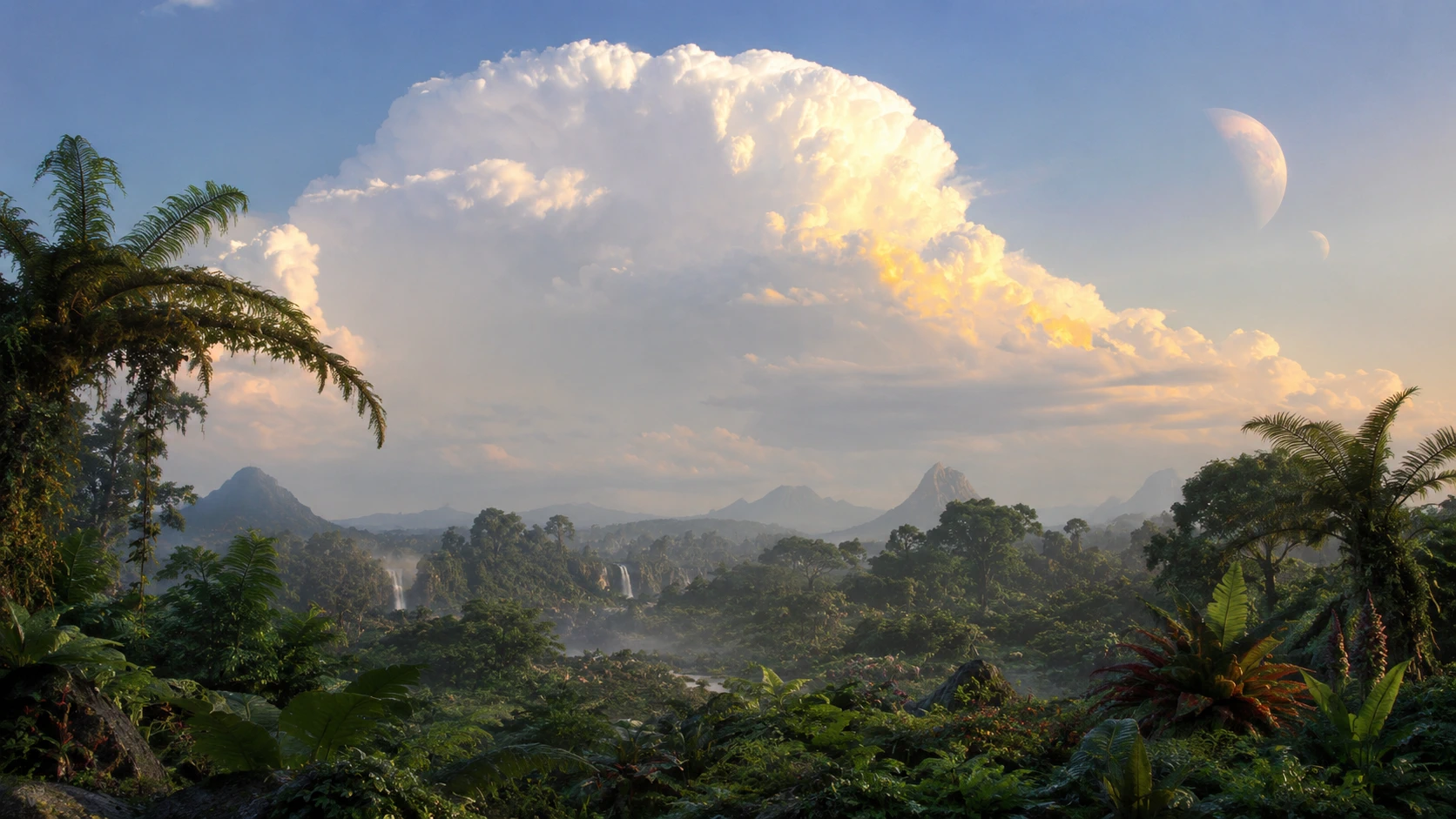
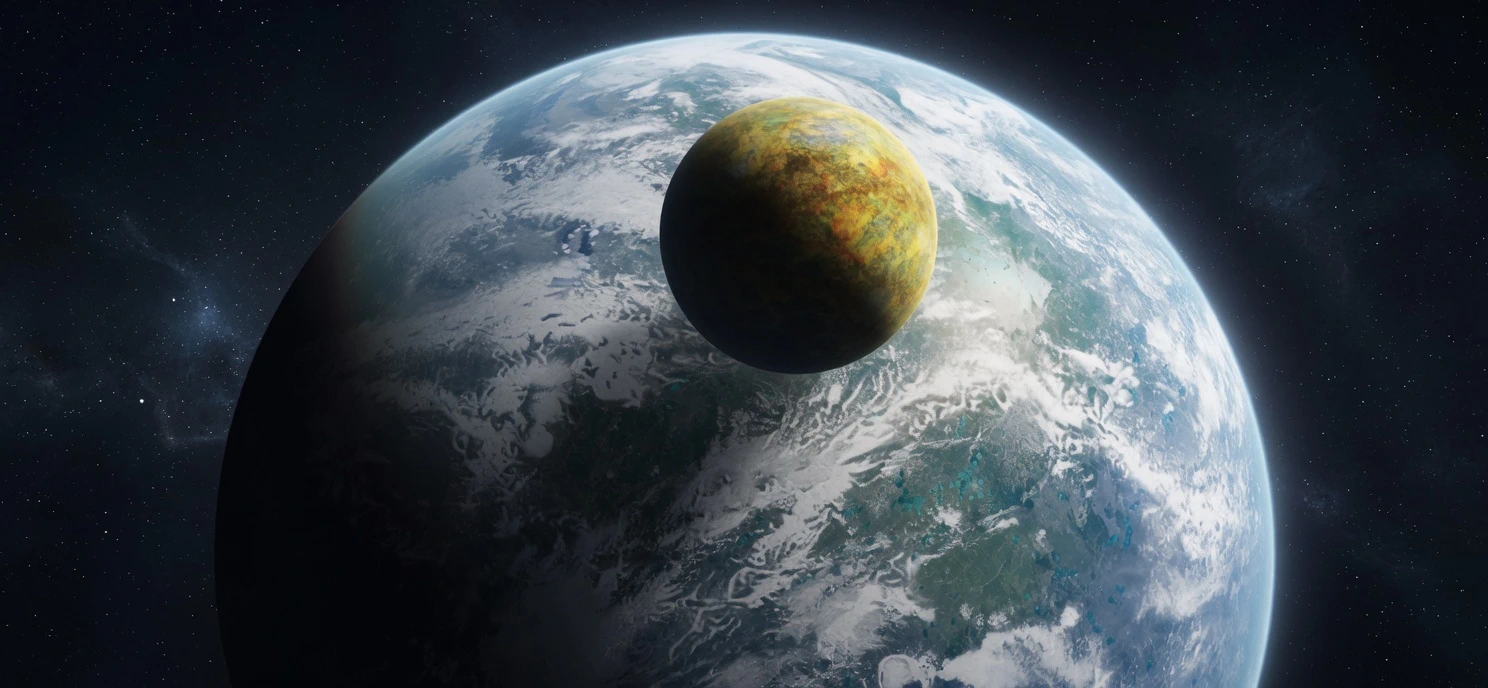
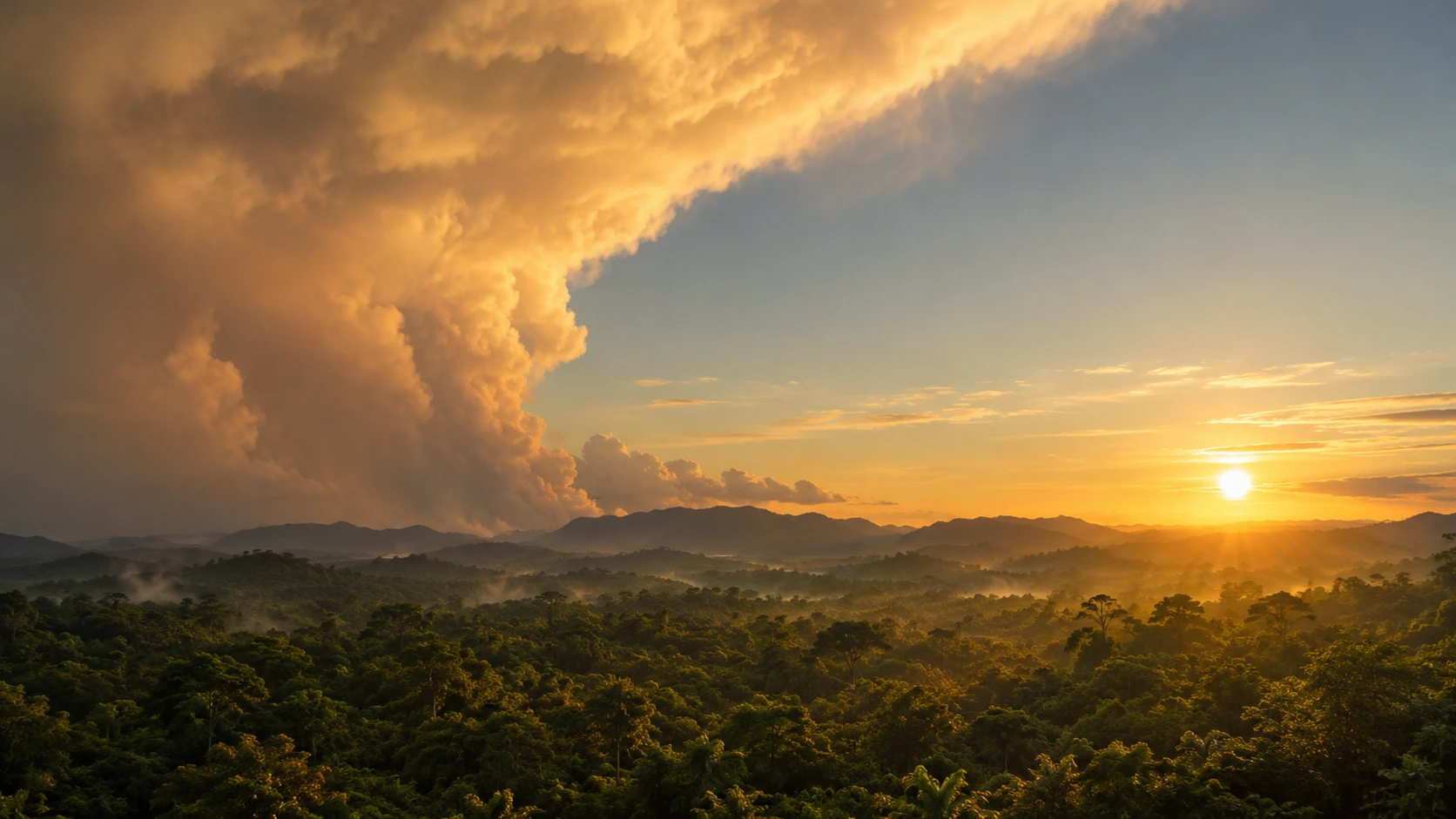
Jungle worlds are terrestrial planets where warm temperatures, abundant moisture, and powerful biological cycles allow dense vegetation to dominate much of the surface. Their forests may stretch from coast to coast, rise in layered canopies hundreds of meters deep, or reclaim cleared land within a few growing seasons.
These planets are often rich in oxygen, food, medicine, biological compounds, and renewable materials. Yet abundance does not make them easy to settle. Thick humidity, poisonous organisms, aggressive predators, unfamiliar diseases, rapid decay, and difficult terrain can turn even a breathable world into a dangerous frontier.
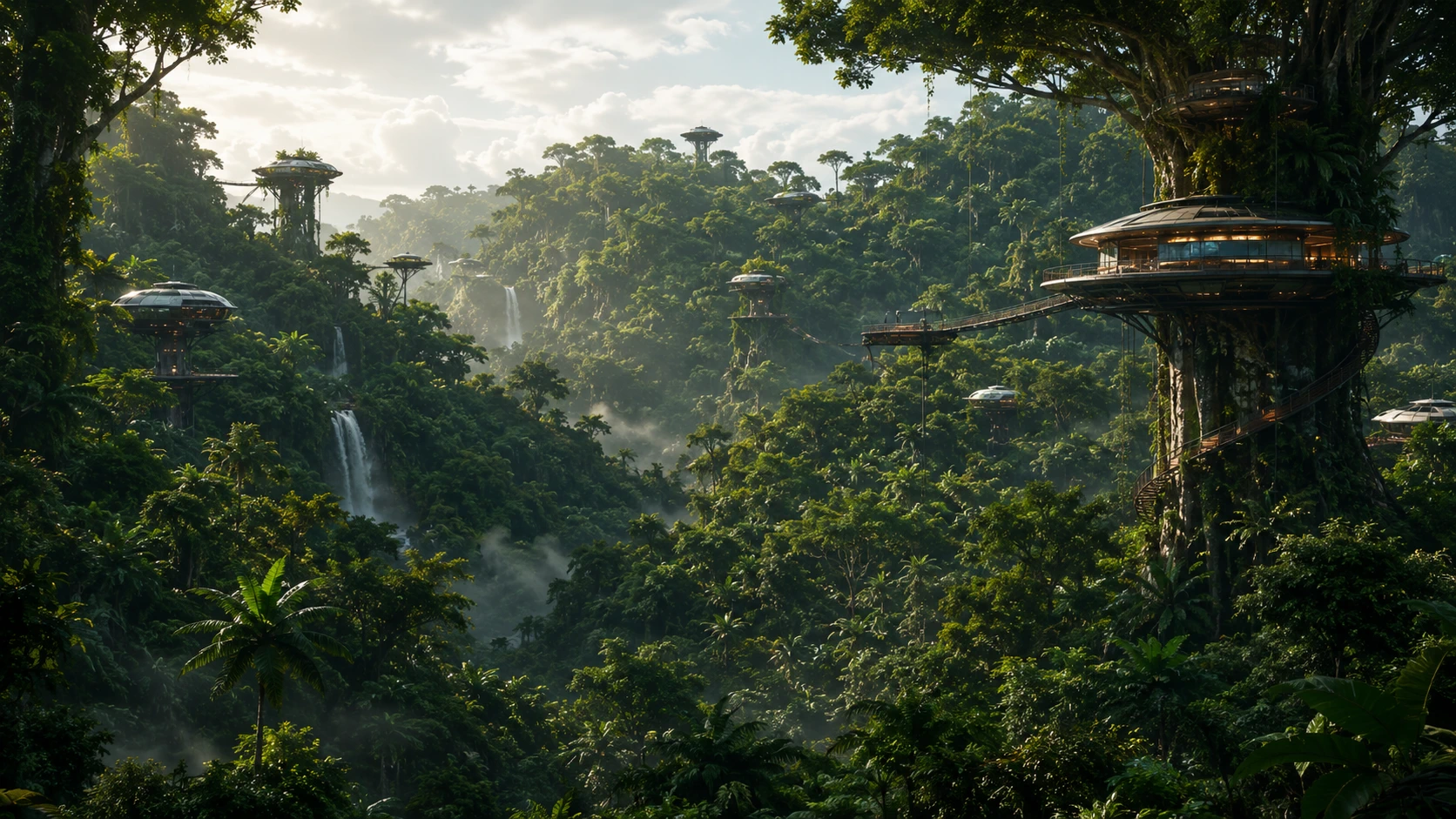
Human settlements therefore grow upward, along rivers, or inside carefully managed clearings. Elevated platforms, canopy roads, sealed research stations, aerial transit, and tree-integrated architecture allow civilization to exist without attempting to overpower an ecosystem that is larger, older, and faster-growing than any city.